Practical Techniques
If you feel like things move too quickly in bed, your first instinct might be to search for a trick that can fix the problem overnight.
A supplement. A special position. A random exercise you saw online.
The reality is usually less exciting — but much more useful.
Lasting longer is often about learning how your body reacts as arousal builds. The earlier you recognize those changes, the more control you have.
And that is something you can actually practice.
Below are several practical techniques that can help you improve control without turning sex into a complicated performance test.
1. Learn What Happens Before You Reach the Point of No Return
One of the biggest mistakes is trying to control ejaculation when you are already seconds away from it.
At that point, you may have very little room to work with.
Instead, start paying attention earlier.
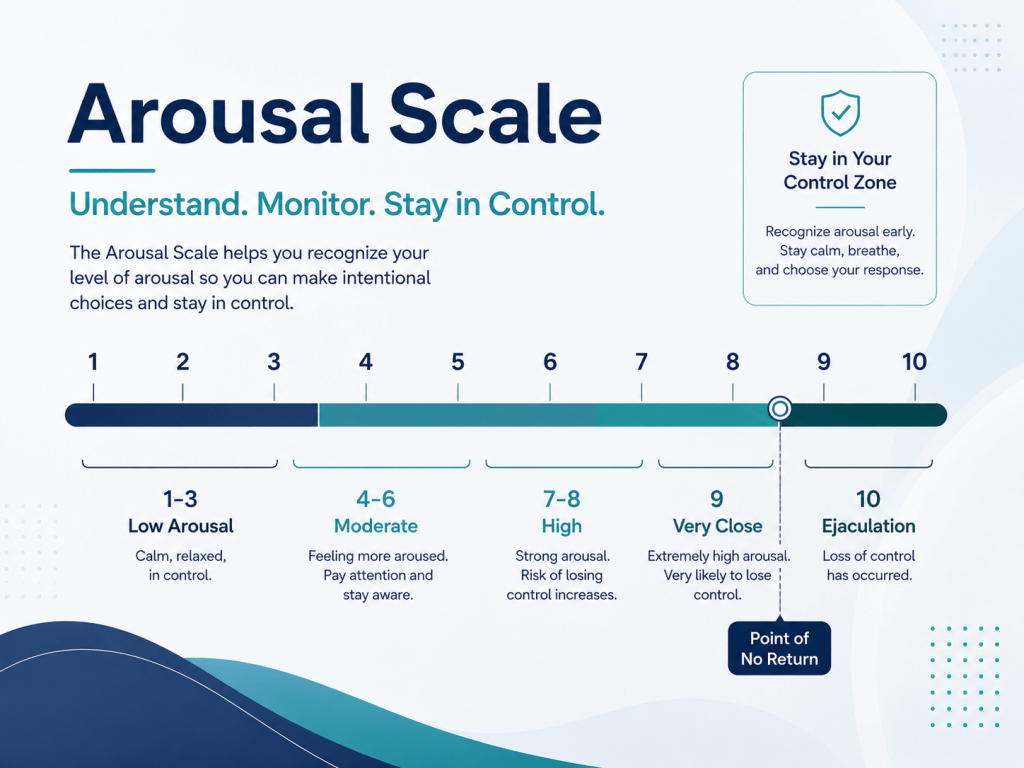
Think of your arousal on a scale from 1 to 10.
A 1 or 2 is almost no arousal.
A 5 or 6 feels good, but you still feel completely in control.
An 8 might be the point where things start accelerating quickly.
A 9 is where stopping becomes difficult.
The exact numbers do not matter. What matters is learning to notice the difference.
During sex or solo practice, pay attention to what changes as your arousal increases.
Does your breathing speed up?
Do you start squeezing your pelvic floor?
Does your stomach become tense?
Do you suddenly start moving faster?
These small changes are useful warning signs.
The goal isn’t to stay at low arousal forever. It’s to become better at noticing when you’re moving too quickly toward the point where ejaculation becomes difficult to stop.
2. Try the Stop-Start Method
The stop-start method is simple, but it takes practice.
During stimulation, continue until you notice that your arousal is getting relatively high.
Then stop.
Don’t wait until you’re one second away from ejaculation.
Stop while you still feel that you have some control.
Give yourself enough time for the intensity to decrease. Once you feel calmer, begin again.
You can repeat this several times during one practice session.
Over time, this can help you become more familiar with the sensations that happen before ejaculation instead of being surprised by them every time.
The important part is not how many times you stop.
It’s learning when to stop.
If you constantly push yourself right to the edge, the exercise can become another race toward ejaculation instead of a control exercise.
Slow it down.
3. Stop Holding Your Breath
Watch what happens to your breathing when you’re highly aroused.
A lot of men start taking short, shallow breaths — or temporarily hold their breath without even noticing.
At the same time, the stomach, thighs, glutes and pelvic floor can start becoming more tense.
Try doing the opposite.
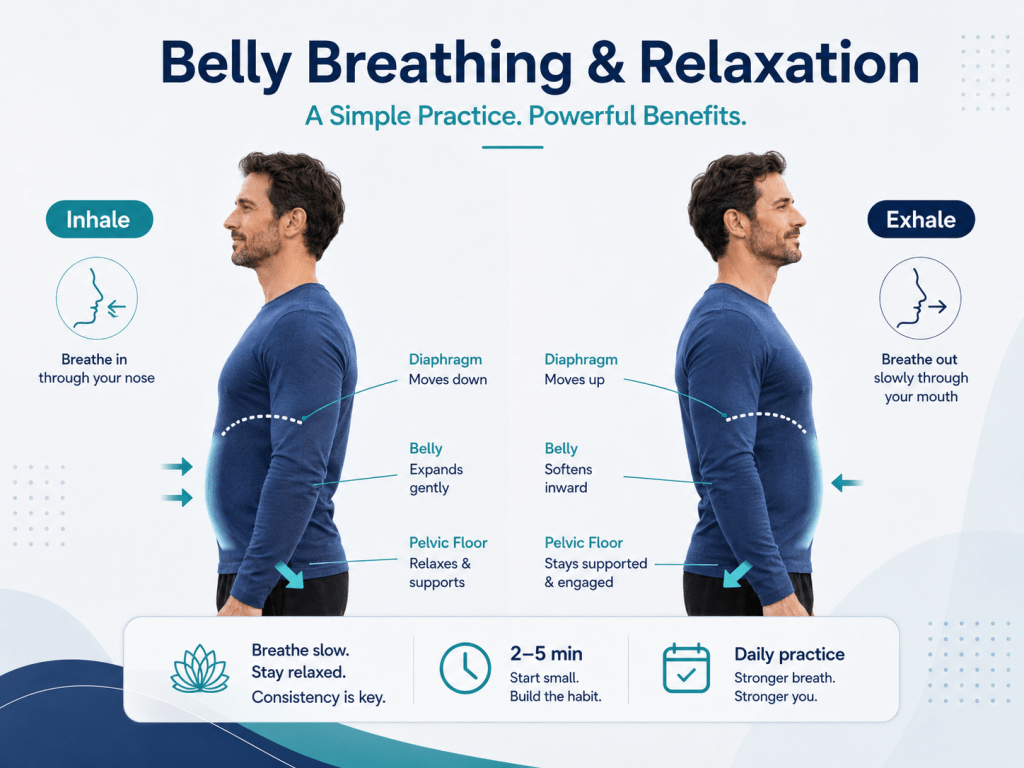
Take a slow breath through your nose and allow your stomach to expand naturally.
Then breathe out slowly without forcing it.
You don’t need an extreme breathing pattern.
You are simply trying to avoid turning your entire body into a tense ball of muscle every time your arousal increases.
Practice slow belly breathing outside of sex first.
It is much easier to use a technique during sex when it already feels familiar.
Five minutes of practice is better than remembering it for the first time when you’re already at maximum arousal.
4. Pay Attention to Your Pelvic Floor
You’ve probably heard that every man should do Kegels.
That’s only part of the story.
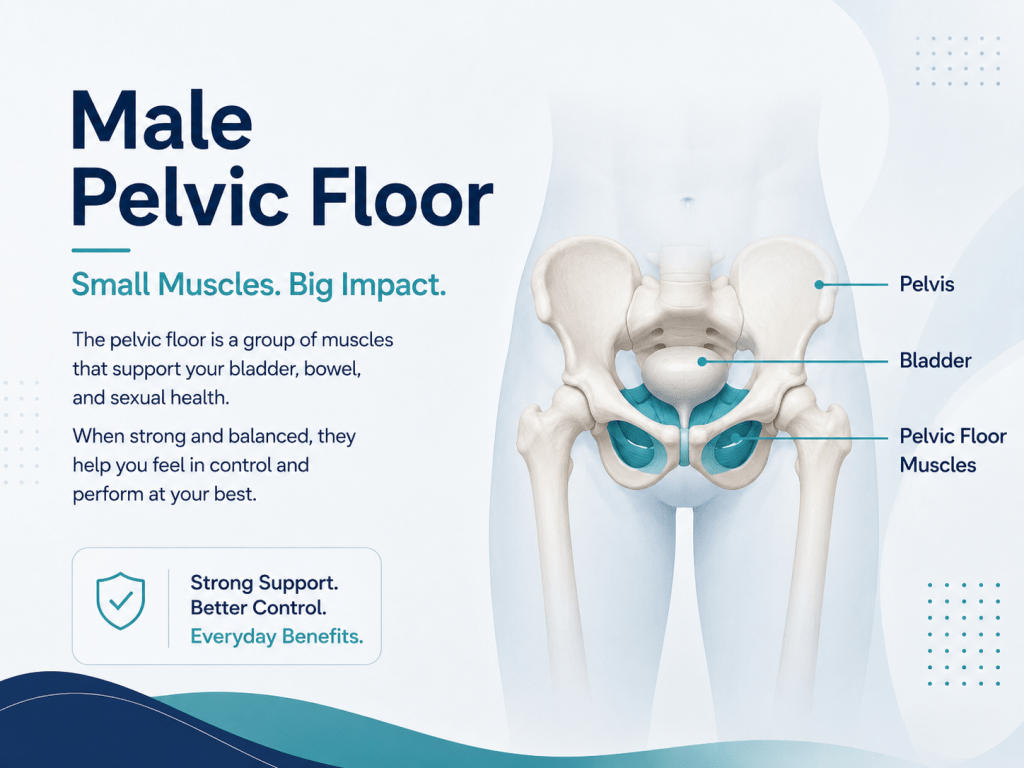
The pelvic floor needs to be able to contract, but it also needs to relax.
Some men unconsciously squeeze these muscles harder and harder as stimulation increases. If that’s what you do, learning to release unnecessary tension may be just as important as learning to contract the muscles.
One simple way to understand the difference is to practice both sensations separately.
Gently contract the muscles you would use to stop urine flow.
That’s roughly the feeling of a Kegel.
Then completely release that contraction.
Notice the difference between tension and relaxation.
A reverse Kegel is usually described as a gentle release or lengthening of the pelvic floor rather than another squeeze.
Don’t force it.
You shouldn’t be aggressively pushing downward or straining.
The point is awareness and control.
You want to be able to notice unnecessary tension and reduce it when you need to.
5. Slow Down Before You Need To
A common pattern looks like this:
Everything feels good, so you go faster.
Then the increased stimulation raises your arousal.
You feel ejaculation getting closer.
So you panic and suddenly stop.
Then you start again.
And within a few seconds you’re right back where you started.
Instead of reacting at the last possible moment, adjust earlier.
If your arousal is climbing quickly, slow your rhythm.
Change the intensity.
Take a short pause.
Focus on your breathing.
Switch what you’re doing.
Small adjustments made early are usually much easier than trying to recover once you’re already extremely close.
6. Don’t Treat Every Sexual Experience Like a Test
This part gets overlooked.
If you’re constantly thinking:
How long has it been?
Am I going to finish too quickly again?
What does my partner think?
You’re not exactly helping yourself stay relaxed.
Performance anxiety can make you hyper-focused on ejaculation.
And when you’re monitoring yourself every few seconds, normal changes in arousal can start feeling like an emergency.
Instead of making time your only measurement of progress, look at control.
Were you more aware of your arousal?
Did you recognize when you were getting close?
Were you able to slow down?
Did you stay more relaxed?
Could you reduce your arousal and continue?
Those are signs of progress too.
7. Practice Outside of Sex
Trying to learn everything during sex puts a lot of pressure on you.
Solo practice gives you a much easier environment to understand your body.
Instead of rushing toward ejaculation, use the session as practice.
Experiment with slower stimulation.
Notice your arousal level.
Practice stopping before you get too close.
Use slow breathing.
Pay attention to pelvic floor tension.
Then start again.
The purpose isn’t to create the longest masturbation session possible.
It’s to build awareness.
Once you understand your own arousal better, it becomes much easier to apply the same ideas with a partner.
8. Don’t Search for One Magic Exercise
This is probably the most important point.
There isn’t one exercise that automatically makes every man last longer.
For one person, the biggest problem may be rushing through stimulation.
For someone else, it may be anxiety.
Another person might constantly tense his pelvic floor without realizing it.
Someone else simply hasn’t learned to recognize his arousal until it’s already too late.
That’s why combining techniques often makes more sense than obsessing over one of them.
You can work on:
- arousal awareness
- stop-start practice
- belly breathing
- pelvic floor control
- relaxation
- changing stimulation before you’re too close
- reducing performance anxiety
Think of these as skills rather than tricks.
Skills improve through repetition.
A Simple Routine to Start With
You don’t need to change everything at once.
Try this during your next few practice sessions.
Start slowly.
Keep your breathing relaxed.
Notice your arousal as it increases.
When you feel yourself approaching the point where control becomes difficult, stop or significantly reduce stimulation.
Take a few slow breaths.
Relax unnecessary tension in your stomach and pelvic floor.
Wait until your arousal drops.
Then continue.
Repeat.
The first goal isn’t to suddenly last 20 minutes.
The first goal is to become better at recognizing what is happening inside your body.
Once you can recognize it, you can start controlling it.
What If Nothing Seems to Help?
Everyone has occasional experiences where ejaculation happens sooner than expected.
That alone doesn’t necessarily mean something is wrong.
But if ejaculation regularly happens earlier than you want, you feel very little control over it, and it’s causing significant frustration or problems in your relationship, it may be worth talking to a qualified healthcare professional.
Premature ejaculation is common, and there are treatment options beyond the techniques discussed here.
You don’t have to rely on random supplements or internet hacks.


Leave a Reply